





Valuation Of Business Assets & Record Keeping
Price:
Get Latest Price

In Stock
Product Specifications
| Service Type | Valuation Services |
| Asset Types | Tangible, Intangible |
| Methodology | Industry Standards |
| Report Format | Customizable |
| Compliance Standards | Local Regulations |
| Turnaround Time | Project Specific |
| Usage | Company valuation, mergers & acquisitions, financial reporting, regulatory compliance, insurance purposes |
| Features | Asset Valuation, Record Keeping, Due Diligence, Financial Analysis, Compliance Support |
Product Overview
Key Features
Valuation of Business Assets & Record Keeping
We provide services of Valuation of Companies , Business organisation , assets , Intangibles., Due Diligence for Takeovers and Mergers, Project Appraisals / Techno Economic Viability and Feasibility Studies / Market Surveys.
We provide the entire range of Valuation services :
- Valuation of Fixed Assets & Current Assets
- Valuation of Tangible Assets - Fixed & Current
- Valuation of Intangible Assets
- Project Appraisal
- Project Finance
- Investigative Audit / Due diligence
- Company Law / Taxation / Regulatory Framework
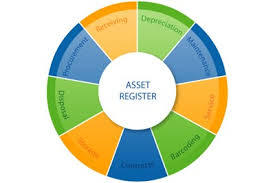
RECONCILIATION OF ASSET REGISTERS
A fixed asset register is a statutory register maintained under section 209(1)(c) of the Companies Act. 1956. This register requires a company to maintain various details relating to all its assets that form a part of its total fixed asset block. Any failure to maintain this register as required by the statute may entail penalty, which may extend to imprisonment in some cases.
Apart from statutory requirements, a well maintained asset register could also help in the following:
INSURANCE
When the correct value or description of assets is not known, there stands a risk of over or under insuring assets. While over insuring would entail excess cost in the form of premium charges, under insuring would imply that the enterprise will not be able to recover adequate amount of claims from the insurance company if any unfortunate event strikes.
IMPAIRMENT OF ASSETS
As per Accounting Standard 28 issued by ICAI, all enterprises will be required to account for any loss on impairment of assets. A well maintained asset register would be the basic requirement for complying with this requirement.
COSTING RECORDS
Proper maintenance of assets assists the enterprise in deriving information regarding output and efficiency of machines and other assets. This in turn aids the allocation of overheads and cost control.
ASSIST STATUTORY INVESTIGATIONS
Often statutory investigations and audits like the excise audit or cost audit call for asset registers. A systematic maintenance of asset registers can make the audit proceedings less cumbersome.
MONITORING ASSETS
Monitoring and maintenance of assets becomes more meaningful and simpler when all data relating to assets is tabulated and maintained in the form of a register.
However, though the exercise appears to be uncomplicated and undemanding on paper, the reality is far from that. In most cases, it is very difficult to get any details of assets that were acquired a long time back. Even if any acquisitions were documented at the time of purchase, most records are either lost or destroyed due to natural calamities or have simply been misplaced or discarded. Also, often when assets are discarded or transferred between plants no matching entry is made in the asset register. Entries if made also seldom carry accurate technical descriptions. In such a situation, it becomes excessively difficult to maintain an asset register.
As a result the assets on ground seldom match the assets as appearing in the asset register. Also the net block value of assets as shown in the fixed asset register does not represent the value of net block as shown in the Balance Sheet. For the purpose of a meaningful maintenance of the asset register, it thus becomes pertinent to reconcile the assets as they appear in the books with the actually existing assets.
The process of reconciliation entails the following three stages:
PHYSICAL VERIFICATION
This refers to a physical verification of assets on ground. Thereafter these assets are classified and segregated on the basis of block of assets as defined by the Companies Act. This exercise requires an intense technical knowledge for the accurate identification of assets. The assets verified, classified and segregated are then tabulated against other details like acquisition date and cost, accumulated depreciation etcetera.
VALUATION OF ASSETS
After the technical exercise, the assets need to be assigned a carrying cost. In some cases where there is no data relating to the actual cost of acquisition, it also involves ascertaining a current value as carrying cost of the asset. As there are many variants of current value, this process also requires expertise in finance. Depending on the situation, the carrying cost is to be fixed at one of the following values for each asset - market value, realizable value or the distress sale value.
MATHEMATICAL RECONCILIATION
After the technical assessment and assignment of values, the figures relating to each asset block are reconciled with their values as appearing in the Balance Sheet.
Gallery
Contact us
#62, Venkateshwara Arcade, 2nd floor
Laxmana Mudaliar street, Bangalore 560001
P: 91-80-41464381
Company Details
Focusing on a customer-centric approach, FIN-LEX CORPORATE ADVISORY SERVICES PVT. LTD. has a pan-India presence and caters to a huge consumer base throughout the country. Get Consultants & Negotiators from FIN-LEX CORPORATE ADVISORY SERVICES PVT. LTD. at Trade India quality-assured services.
Business Type
Service Provider
Employee Count
15
Establishment
2001
More Product From This seller










Seller Details
Bengaluru, Karnataka

Accepts only Domestic inquiries
Managing Director
Mr. R. Srinivasan
Address
Door No. 62, 2nd Floor, Venkateshwara Arcade, 2nd Cross Of Commercial Street, Above Bata Showroom, Laxmana Mudlayar Road, Bengaluru, Karnataka, 560001, India
Report incorrect details