


Six Sigma Certification - Comprehensive Quality Improvement Methodology | Dmaic Process, Problem-solving Techniques, Organizational Commitment
Get Latest Price

In Stock
Product Specifications
| Certification Type | Six Sigma |
| Methodology | DMAIC |
| Level | Various |
| Duration | Variable |
| Delivery | Online/In-person |
| Format | Course/Workshop |
| Usage | Process optimization and defect reduction across diverse industries |
| Features | Process Improvement, Defect Reduction, Efficiency Gains, Quality Enhancement |
Product Overview
Key Features
Six Sigma Certification
Six Sigma is a business management strategy, originally developed by Motorola, that today enjoys wide-spread application in many sectors of industry.
The word 'Sigma' is a Greek letter used for a statistical term that measures how far a given process deviates from perfection(standard deviation).The higher the sigma number, the closer to perfection. One Sigma is not very good, six sigma means only 3.4defects per million.
The Idea behind six sigma is that if you can measure how many "defects" you have in a process, you can systematically figure out how to eliminate them and get as close to "zero defects" as possible.
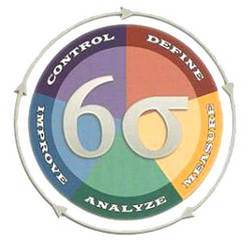
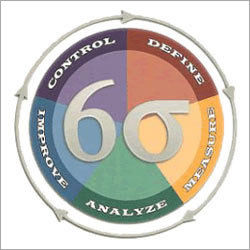
What Is DMAIC?
DMAIC is a basic component of the Six Sigma methodology-a way to improve work processes by eliminating defects. The Six Sigma methodology is widely used in many top corporations around the world. It is normally defined as a set of practices that improve efficiency and eliminate defects.
The Six Sigma system strives to reduce these variations in both business and manufacturing and in order to do so; these processes must be measured, analyzed, controlled and improved upon. In order to improve
upon these processes, the Six Sigma system requires sustained commitment from an entire organization-especially from the top echelons to help guide lower rung workers and policies. The DMAIC methodology includes five steps including; Define, Measure, Analyze, Improve and Control.
Six Step To Lean Six Sigma Implementation
The following is a brief overview explanation of a Six Steps to Lean Six Sigma deployment and execution process, recommended for small and mid-sized organizations
- Reasons to adopt six sigma.
- Defined process for problem solving.
- Proven methodology to solve problems.
- Consistency with results
- Focus on the "bottom line" which encourages credibility/support from the top of the organization.
- In today's dynamic business era, where intense competition and perennial change are the order of the day, it is imperative for organizations to focus on the quality of their products, systems, and processes.
- Quality is the measure of customer's satisfaction derived from the use of a particular product or service. Quality is always measured from the customer's perspective. It is the adherence of organizational processes to the set benchmarks.
- Six Sigma is a quality improvement approach that calls for identification of causes of mistakes or defects in organizational systems and processes. The paper elucidates the Six Sigma approach.
Company Details
Focusing on a customer-centric approach, Priya Consultancy INDIA PVT. LTD. has a pan-India presence and caters to a huge consumer base throughout the country. Get Consultants & Negotiators from Priya Consultancy INDIA PVT. LTD. at Trade India quality-assured services.
Business Type
Service Provider
Establishment
2005
GST NO
09AAHCP2776L2ZR
Certification
registered company
More Products From This Seller







Seller Details

GST - 09AAHCP2776L2ZR
Ghaziabad, Uttar Pradesh
director
Ms. Poonam Sharma
Address
H.No. 87, Kailash Park, Arthala Mohan Nagar, Ghaziabad, Uttar Pradesh, 201007, India
Report incorrect details