


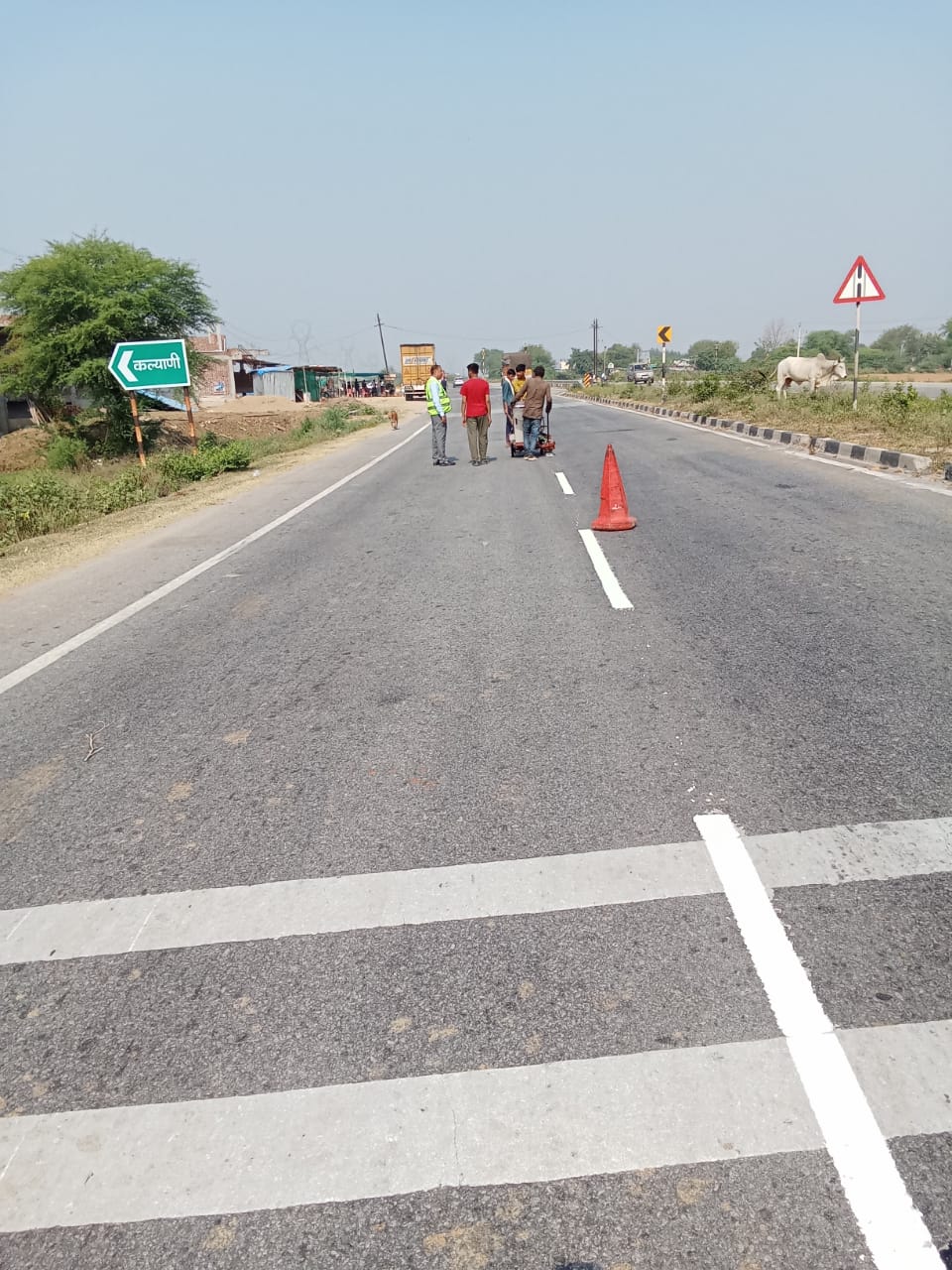
Road Marking Services - Thermoplastic, 100-150mm White Lines | High Reflectivity, Irc Compliant, Improved Visibility
Price: 300 INR
Get Latest Price
Minimum Order Quantity :
300

In Stock
Product Specifications
| Material | Thermoplastic |
| Color | White |
| Width | 100-150mm |
| Thickness | 2-3mm |
| Reflectivity | High |
| Standards | IRC |
| Usage | Road safety and traffic management in India, including lane markings, pedestrian crossings, and signage |
| Features | Safety, Improved, Visibility, Compliance, Efficiency |
| Payment Terms | Cash Advance (CA), Cash in Advance (CID) |
| Supply Ability | 3000 Per Week |
| Delivery Time | 1 Week |
| Sample Available | No |
| Sample Policy | Contact us for information regarding our sample policy |
| Main Domestic Market | All India |
| Certifications | none |
Product Overview
Key Features
In India, road markings are a crucial component of traffic management and road safety. They provide important visual cues for drivers, pedestrians, and cyclists, helping to maintain order and ensure the smooth flow of traffic. Road markings in India are standardized by the Indian Roads Congress (IRC) and are primarily governed by the Manual of Specifications and Standards for Highway Markings. These markings help in guiding road users and maintaining safety on the roads.
Key Road Marking Types in India
Longitudinal Markings (Along the Direction of Traffic)
Center Line : A solid white line in the middle of the road, dividing traffic moving in opposite directions. If the line is broken, overtaking is allowed, but if it's solid, overtaking is prohibited.
Edge Line : Marked on the edge of the road, typically in white, indicating the boundary of the roadway.
Lane Marking : Broken or solid lines dividing traffic into lanes in multi-lane roads. Vehicles are expected to stay within these lanes for smoother flow.
Bus Lane Marking : A special marking indicating lanes reserved for buses.
No Overtaking Line : A solid, thick line that indicates areas where overtaking is not permitted due to safety concerns, such as curves, intersections, or pedestrian crossings.
Transverse Markings (Across the Road)
Stop Line : A solid white line placed at the intersection or pedestrian crossings to indicate where vehicles should stop. It is placed before a traffic signal or stop sign.
Crosswalk (Pedestrian Crossing) : White, zebra-stripe-like markings that indicate areas where pedestrians have the right of way to cross.
Yield Line: A series of short dashes or lines that indicate where vehicles should yield, often at intersections.
Arrow Markings : These indicate the direction of traffic flow or turning lanes (e.g., left or right turns).
Other Road Markings
Chevron Markings : Yellow, V-shaped markings placed on the road, indicating a curve or danger ahead. These are usually used on sharp turns and curves on the road.
Directional Arrows : These are used to indicate the direction of travel for vehicles and pedestrians, ensuring that they follow the intended paths.
Hatching/Box Markings : These are used at intersections and pedestrian crossings to prevent vehicles from blocking the intersection or crosswalk.
Pedestrian Island Markings : These are used in the middle of the road to create a safe area for pedestrians to wait when crossing busy roads.
Road Marking Materials in India
Paints : Reflective paints are commonly used for markings on the roads. These paints are either water-based or solvent-based. Reflective paints enhance visibility at night and in low-light conditions.
Thermoplastic Marking Paint : This is a popular option in India, used for road markings because it is durable, quick-drying, and resistant to wear and tear. It is often used in high-traffic areas and highways.
Cold Plastic Road Marking : Used in areas where the temperature varies, these markings do not require heating and are easy to apply.
Reflective Glass Beads : These beads are embedded into the paint to increase visibility, especially at night. They reflect headlights, making the markings more visible to drivers in dark conditions.
Standard Specifications
Colors : The most common color used for road markings in India is white, though yellow is used for the edge line, no-overtaking zones, and road hazards.
Width and Length : The width of the lines is standardized by the IRC. For instance, the width of the lane markings is generally 100 mm, while the width of the edge line is 150 mm.
Spacing : The spacing between dashed lines varies depending on the type of marking. For instance, lane marking dashes typically have a spacing of 3 meters, while stop lines are solid and continuous.
Key Road Marking Types in India
Longitudinal Markings (Along the Direction of Traffic)
Center Line : A solid white line in the middle of the road, dividing traffic moving in opposite directions. If the line is broken, overtaking is allowed, but if it's solid, overtaking is prohibited.
Edge Line : Marked on the edge of the road, typically in white, indicating the boundary of the roadway.
Lane Marking : Broken or solid lines dividing traffic into lanes in multi-lane roads. Vehicles are expected to stay within these lanes for smoother flow.
Bus Lane Marking : A special marking indicating lanes reserved for buses.
No Overtaking Line : A solid, thick line that indicates areas where overtaking is not permitted due to safety concerns, such as curves, intersections, or pedestrian crossings.
Transverse Markings (Across the Road)
Stop Line : A solid white line placed at the intersection or pedestrian crossings to indicate where vehicles should stop. It is placed before a traffic signal or stop sign.
Crosswalk (Pedestrian Crossing) : White, zebra-stripe-like markings that indicate areas where pedestrians have the right of way to cross.
Yield Line: A series of short dashes or lines that indicate where vehicles should yield, often at intersections.
Arrow Markings : These indicate the direction of traffic flow or turning lanes (e.g., left or right turns).
Other Road Markings
Chevron Markings : Yellow, V-shaped markings placed on the road, indicating a curve or danger ahead. These are usually used on sharp turns and curves on the road.
Directional Arrows : These are used to indicate the direction of travel for vehicles and pedestrians, ensuring that they follow the intended paths.
Hatching/Box Markings : These are used at intersections and pedestrian crossings to prevent vehicles from blocking the intersection or crosswalk.
Pedestrian Island Markings : These are used in the middle of the road to create a safe area for pedestrians to wait when crossing busy roads.
Road Marking Materials in India
Paints : Reflective paints are commonly used for markings on the roads. These paints are either water-based or solvent-based. Reflective paints enhance visibility at night and in low-light conditions.
Thermoplastic Marking Paint : This is a popular option in India, used for road markings because it is durable, quick-drying, and resistant to wear and tear. It is often used in high-traffic areas and highways.
Cold Plastic Road Marking : Used in areas where the temperature varies, these markings do not require heating and are easy to apply.
Reflective Glass Beads : These beads are embedded into the paint to increase visibility, especially at night. They reflect headlights, making the markings more visible to drivers in dark conditions.
Standard Specifications
Colors : The most common color used for road markings in India is white, though yellow is used for the edge line, no-overtaking zones, and road hazards.
Width and Length : The width of the lines is standardized by the IRC. For instance, the width of the lane markings is generally 100 mm, while the width of the edge line is 150 mm.
Spacing : The spacing between dashed lines varies depending on the type of marking. For instance, lane marking dashes typically have a spacing of 3 meters, while stop lines are solid and continuous.
Company Details
White Magnets, Established in 2018 at Gwalior in Madhya Pradesh, is a leading service provider of Marking Services in India. White Magnets is one of Trade India's verified and trusted names for listed services. With extensive experience in the field of Marking Services, White Magnets has made a reputed name for itself in the market with satisfactory Road Marking Services, etc.
Focusing on a customer-centric approach, White Magnets has a pan-India presence and caters to a huge consumer base throughout the country. Get Marking Services from White Magnets at Trade India quality-assured services.
Focusing on a customer-centric approach, White Magnets has a pan-India presence and caters to a huge consumer base throughout the country. Get Marking Services from White Magnets at Trade India quality-assured services.
Business Type
Service Provider
Establishment
2018
Working Days
Monday To Sunday
GST NO
23AYLPY6799H1ZF
Payment Mode
Cash Against Delivery (CAD), Cash Advance (CA)
More Products From This Seller



Seller Details

GST - 23AYLPY6799H1ZF
Gwalior, Madhya Pradesh
Proprietor
Mr. Robin Yadav
Address
Plot No- E 2, M.P.E.B. Colony, Near New Collectorate Gwalior, Madhya Pradesh, 474011, India
Report incorrect details