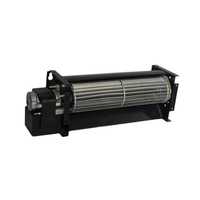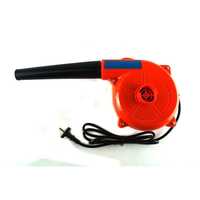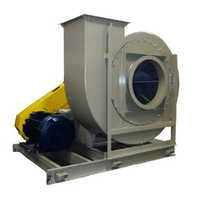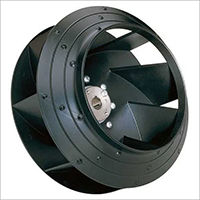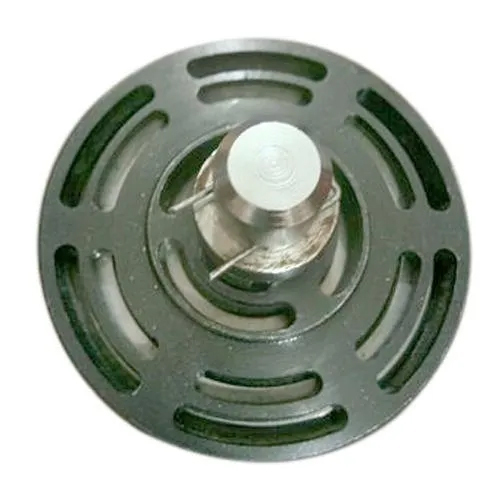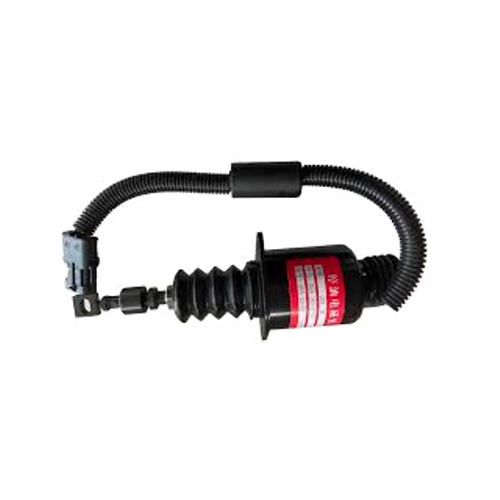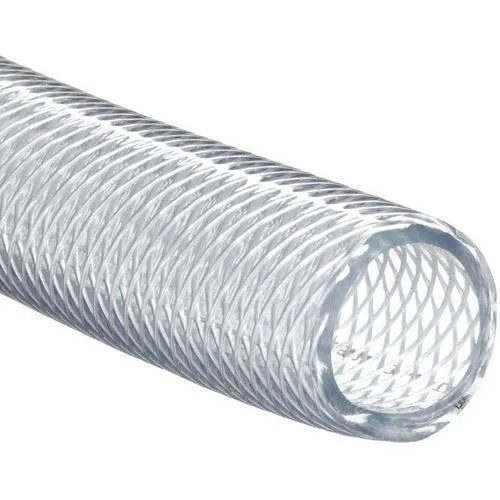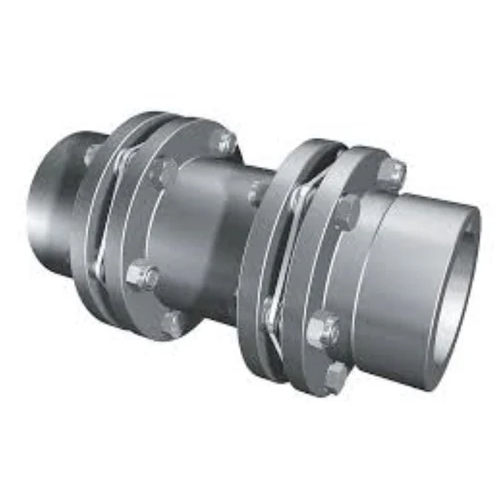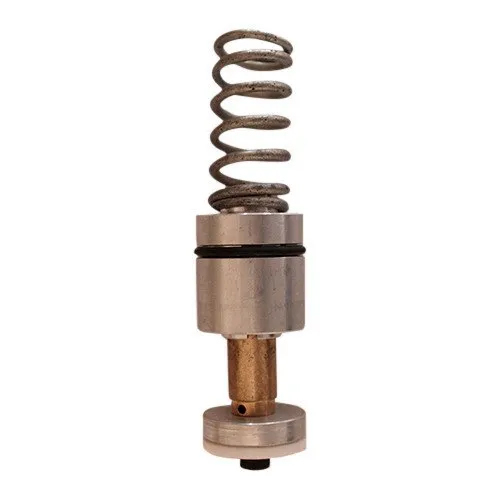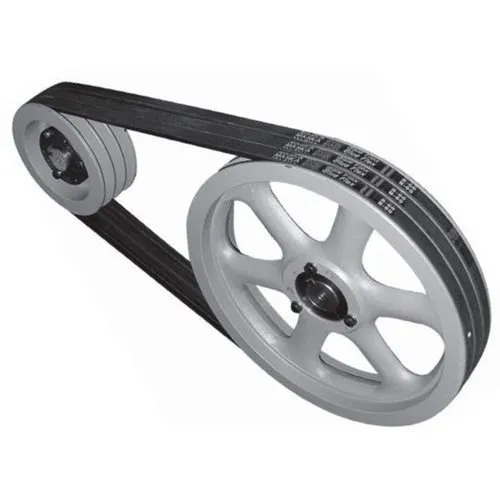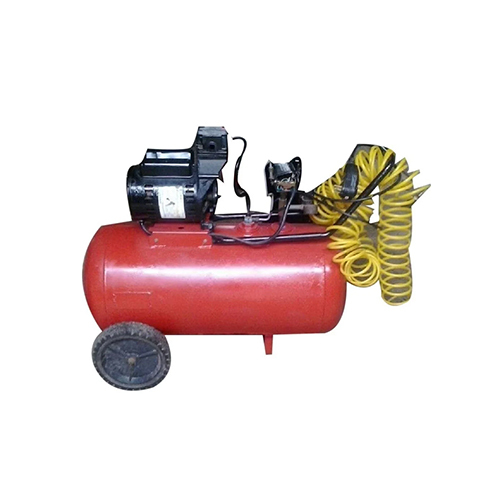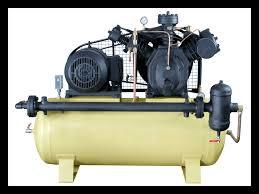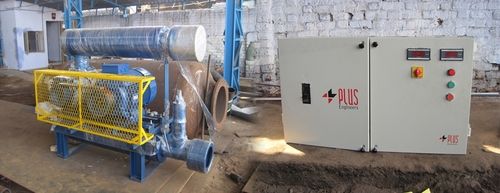
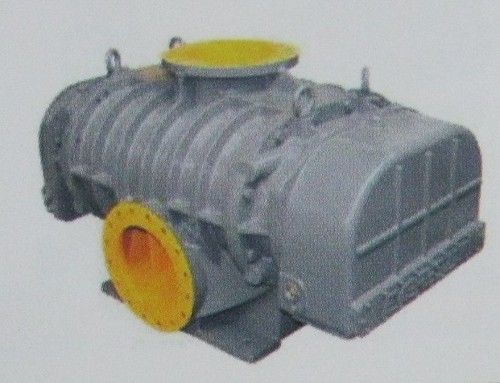
11500.0 INR/Piece
MOQ1 Piece/Pieces
ColorGray
MaterialAluminum
SizeStandard
UsageAir Pump
Product DescriptionUnited Enterprises is bringing together trendsetting innovative technological advancements through our products for our customers. We believe that continual improvement and continual re-engineering of our products will keep us at the top of cutting-edge technologies.\015\012In designing our products
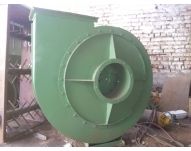
Super Bonanza
Trusted Seller11 Years
Price: 95000 INR/Unit
MOQ1 Unit/Units
ColorGrey
Product TypeCentrifugal Blower
MaterialSteel
PressureHigh Pressure
ApplicationIndustrial
Frequency (MHz)50 Hertz (HZ)
Super Bonanza
Trusted Seller
Super Seller5 Years
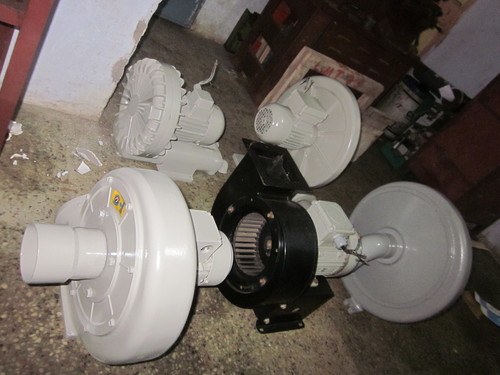
Price: 25000 INR/Piece
MOQ1 , Piece/Pieces
PowerElectric
Max PressureDepends on Model
Flow RateVaries by Model
ColorBlue and Gray
Life Span10-15 years
Output PowerVaries by Model
Super Bonanza
Trusted Seller13 Years
Price: 100000 INR/Unit
MOQ1 Unit/Units
ColorWhite Blue
Product TypeCentrifugal Blower
Materialother , Mild Steel
PressureHigh Pressure
Power SourceManual Blower
Warranty1 Year
Trusted Seller
Super Premium
Super Seller5 Years
Price: 172000 INR/Piece
MOQ1 Piece/Pieces
Motor Power20 Horsepower (HP)
ColorSliver
Materialaluminium
Capacity1500 m3/hr
Frequency (MHz)50 Hertz (HZ)
Power SourceElectric Blower
Trusted Seller
Super Seller16 Years
Trusted Seller
Super Seller12 Years
Price: 65000 INR/Unit
MOQ1 Unit/Units
ColorBlue
Motor Power1-1.5 Kilowatt (kW)
Pressurizationhigh Pressure
Product TypeOthers, Air blower
Materialother , Cast Iron
PressureHigh Pressure kgf/cm2
Trusted Seller
Super Seller
Premium Seller8 Years
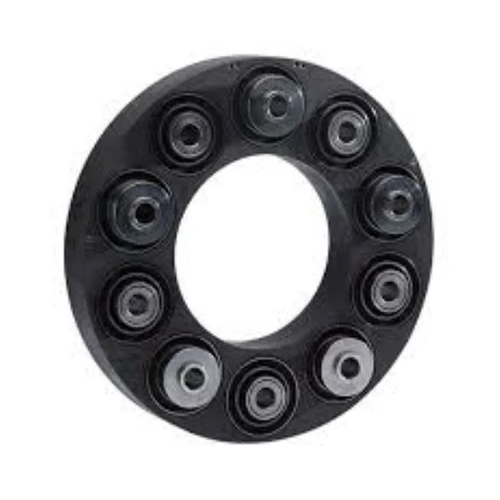
Price: 10000 INR/Piece
MOQ1000 Piece/Pieces
Product DescriptionHigh Volume Low Speed Fans - Hvls
Trusted Seller
Super Seller6 Years
Price: 1000000 INR/Piece
MOQ1 Piece/Pieces
ColorBlack
Life Span5 Years
Product TypeOthers, Anti Vibration Pad
Materialother , Rubber
ApplicationOther
Noise LevelReduces noise up to 30 dB db
Trusted Seller
Super Seller
Premium Seller14 Years
Price Trend: 42000.00 - 200000.00 INR/Number
MOQ1 Number
PressurizationMedium Pressure
Pressure Range100 to 1000 mmwc
Output PowerAs per application Horsepower (HP)
Flow RateCustomer to Specify
Motor PowerAs per the application Kilowatt (kW)
Max PressureCustomer to Specify ft3/min (CFM)
Trusted Seller
Super Seller
Premium Seller18 Years
Product DescriptionBlower Pulverizer In Ahmedabad Confider Industries
Trusted Seller
Super Premium5 Years
Product DescriptionSPECIFICATIONS :-\015\012M.O.C : P.P / F.R.P\015\012SIZE : 1/2 H.P TO 5 H.P\015\012CAPACITY : 500 C.F.M TO 500 C.F.M\015\012PRESSURE : 1.05" W.G.
Trusted Seller
Super Premium19 Years
Price: 55000 INR/Unit
MOQ1 Unit/Units
ColorBlue
Product TypeCentrifugal Blower
MaterialFRP
Power SourceElectric Blower
Voltage220 Volt (v)
Warranty1 Year
Trusted Seller
Premium Seller6 Years
Price: 30000 INR/Piece
MOQ1 Piece/Pieces
Pressure Rangeup to 400 mm/Aq
Vaccum Rangeup to 400 mm/Aq
Power0.5 HP / 370 W
Max Pressure400 mm/Aq
Motor Power0.5 HP
Life SpanLong life
Trusted Seller
Super Seller7 Years
MOQ1 Unit/Units
MaterialSteel
PressureMedium Pressure
Frequency (MHz)50 Hertz (HZ)
Power SourceElectric Blower
Voltage220 Volt (v)
ColorBlue
Trusted Seller
Super Seller9 Years
Price: 45000 INR/Piece
MOQ10 Piece/Pieces
ColorBlue
MaterialSteel
PressureLow Pressure
ApplicationIndustrial
Frequency (MHz)50 Hertz (HZ)
Power SourceElectric Blower
Trusted Seller
Premium Seller15 Years
Price Trend: 40000-135000 INR/Piece
MOQ1 , Piece/Pieces
PressurizationMedium Pressure
Product TypeExhaust Blowers, Others
MaterialFRP
ApplicationIndustrial
Power SourceElectric Blower
ColorGrey
Trusted Seller
Super Seller
Premium Seller16 Years
Price: 80000 INR/Piece
MOQ1 , Piece/Pieces
MaterialSteel
ApplicationIndustrial
Trusted Seller
Premium Seller5 Years
Price Trend: 1.00 - 1.00 INR/Piece
MOQ1 Piece/Pieces
Pressure Range12000
Power440 Volt (v)
PressurizationMedium Pressure
Flow Rate12000
Product TypeCentrifugal Blower
MaterialSteel
Trusted Seller
Super Seller12 Years
Price: 35000 INR/Unit
MOQ1 Unit/Units
ColorSliver
PressurizationMedium Pressure
Product TypeCentrifugal Blower
MaterialSteel
PressureMedium Pressure PSI
ApplicationFilling
Premium Seller4 Years
Price: 125000 INR/Piece
MOQ1 Piece/Pieces
Motor Power2 Horsepower (HP)
Flow Rate3000 CFM
ColorWhite
Product TypeCentrifugal Blower
MaterialSteel
ApplicationIndustrial
Trusted Seller
Super Seller
Premium Seller5 Years
Price: 32000 INR/Piece
MOQ1 Piece/Pieces
Flow Rate0 - 300000 m3/h
Power2.2 - 400 kw
Pressure Range2705 - 15563 PA
Frequency (MHz)50 - 60 Hz
Voltage220 - 380 V
Trusted Seller
Super Seller4 Years
MOQ1 Piece/Pieces
Pressurizationhigh Pressure
MaterialSteel
ApplicationIndustrial
Power SourceElectric Blower
ColorBlack
Trusted Seller
Premium Seller4 Years
Price: 35000 INR/Unit
MOQ1 Unit/Units
ColorGrey
Product TypeOthers, Centrifugal Fan
MaterialSteel
PressureHigh Pressure
ApplicationIndustrial
Frequency (MHz)50 Hertz (HZ)
Trusted Seller
Super Seller
Premium Seller7 Years
Product DescriptionIndustrial Blower Fan
Trusted Seller
Super Seller11 Years
Price: 5000 INR/Unit
MOQ1 Unit/Units
Motor Power3 Horsepower (HP)
ColorBlue paint Coated
Flow Rate1000 cfm
PressureHigh Pressure
Frequency (MHz)50 Hertz (HZ)
Power SourceElectric Blower
Trusted Seller
Premium Seller2 Years
Product DescriptionWe are manufacturer of centrifugal fan and blowers which is specially designed to serve the specific requirement of various industries. etc.\015\012\015\012Features of Centrifugal Blowers\015\012\015\012Capacity range: 250 m3/hr to 2,00,000 m3/hr.\015\012\015\012Static Pressure Range: 10 mm wg to
Trusted Seller
Premium Seller22 Years
Motor Power2 HP
Max Pressure180 mm WG
Life Span8-10 Years
Power2 HP
Flow Rate1700 CFM
Output Power1.5 kW
Trusted Seller
Super Seller7 Years
Latest From Air Blowers
To put it simply, a blower is a machine with a rotating impeller that accelerates the flow of air or gas. Whether you need to vent, aspirate, cool, ventilate, transmit, or do any number of other things with air or gas, you can count on them. In the business world, a blower may also be referred to as a centrifugal fan.
1. Furnace Fume Extraction systems
Exhaust air from a furnace can be sucked outside using a blower. Some handheld vacuum blowers can also be used to blow away leaves. Wherever there is a need to control the amount of heat and smoke produced by a process, they are used. They remove the dangers of open flames and smoke from the workplace, making it more comfortable for everyone.
2. Operation of Dust Collection
Dust collection systems often include air blowers. The primary objective of filtration is the continuous and massive removal of airborne particles typically in the 2–10 m range. A single vacuum unit in a basic dust collection system creates suction and filters the air entirely. Bags are used to contain the particles that are sucked into the impeller. Once the air has been purified, it can be recycled back into space. In more involved and extensive systems, a two-stage technique is used to separate particles based on their sizes.
3. Controlling Oxidizing Air Pollution
When it comes to reducing air pollution, heat or components with additives are typically utilized to trigger oxidation reactions, and here is where air blowers come in handy. These oxidizers "wash" contaminated air with oxygen by passing it through platinum or palladium, resulting in the creation of harmless byproducts like nitrogen and oxygen.
4. Controlling Non-Oxidizing Air Pollution
Air Blower employs a novel strategy for removing contaminants. Air scrubbers (either wet or dry) are used to finish the filtration process. The dry varieties utilize alkaline materials to eliminate gases like sulfur oxides or hydrogen chlorides.
5. Pulse Jet Cartridge
Pulse Jet Cartridge Filters make use of air blowers. This filtration method is typically used for free-flowing dust and particulates in regions with ambient temperature conditions.
6. Filtering Pulse Jet hose Bag Type
Pulse Jet Hose Bag Type Filter utilizes air blowers for filtration. The filter bags last longer, there are less emissions, less energy is used, and less room is needed on the floor—all of which are significant benefits of these types of filters.
Air is sucked into the hub of the impellers and distributed to the various blades. In addition to increasing the air stream's volume, the increased centrifugal force also speeds up the air. The resulting blast of supersonic air is then contained within the blower's housing, where it exerts force.
1. Impeller and Airflow
The impellers spin, producing what amounts to a vacuum. This causes air to be sucked in and forced out through the blades.
What this means is that while the air's velocity, which is the measure of the distance and speed at which air is traveling (typically defined in meters per second), is constant, the mass flow rate, which is the mass of air passing a point in the system (typically defined in kilograms/pounds per second), is not.
That's why centrifugal air blowers may function at low pressure ratios; they employ low flows to generate high velocities. Because of this, Centrifugal Blowers are more cost-effective than their compressed-air counterparts.
2. Pressure and Energy
The impellers in air blowers harness the motion of the air to boost the flow rate. Their impellers distribute energy to the surrounding air, which allows them to function.
Centrifugal air blowers function most effectively while operating at low pressure. This is checked by measuring both the local pressure (the pressure at a given spot) and the cumulative pressure (the pressure experienced by the whole system as a whole) of the blower system in question.
3. Air Blower Design
Aside from the rotating impellers, air blowers consist of a housing, ducts for taking in air and expelling it, a driveshaft, and a driving mechanism.
The impeller blade's angle, length, and rotational speed are all crucial components of a centrifugal blower's design. These are the primary factors that determine the airflow rate, air volume, and blower capacity.
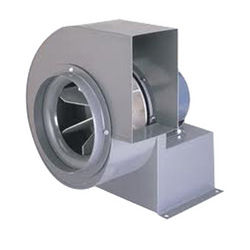
1. Centrifugal Blowers
The majority of ventilation systems employ centrifugal blowers. They also play a role in gas transportation and pollution mitigation.
This blower's revolving impellers increase the velocity and volume of the air stream passing past them. Centrifugal fans can reverse the flow of air. The fluid, whether air or gas, enters the blower, rotates over a 90-degree arc, and then exits at a much higher velocity.
If you need a constant gas transfer, a centrifugal blower is an instrument for you. The velocity of the gas is increased as it moves through a centrifugal blower. Whenever gas is released from a centrifugal blower, it is replaced by fresh gas entering at the same time to maintain a constant gas pressure.
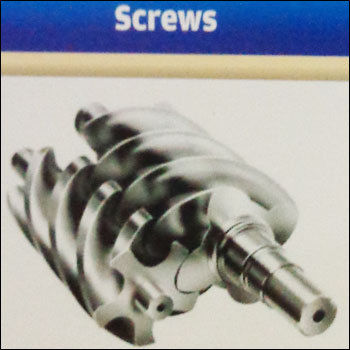
2. Helical Screw Blowers
The main rotors of helical screw blowers are bilobular. If you have a second rotor with a flute, this one will slot right in. The timing of the two rotors' helical rotation keeps them from colliding with one another.
Air pressures generated by helical screw blowers are often greater than those generated by rotary lobe blowers. Compared to rotary lobe blowers, they operate with less noise.
These complex fans are viable solutions because they use less energy than conventional models. Due to their hermetically sealed construction, helical screw blowers produce a consistent airflow with minimal air loss. In some cases, helical screw blowers are used to move gas rather than air.
3. Regenerative Blowers
Pressure is generated by displacing air molecules in regenerative blowers. The blades of the impeller rotate to pull in and collect the air between them. The air is pushed forward by the impeller as it spins, and then returns to the base of the blade.
If you need to move a lot of air at low pressure, these blowers are a suitable option. They require little in the way of upkeep thanks to the fact that they are oil-free and self-lubricating. Avoiding the spread of oil in the air makes oil-free blowers a need.
They play a crucial role in places where contamination could have a negative impact, such as hospitals and food processing plants.
4. Positive Displacement and Rotary Lobe Blowers
The purpose of a positive displacement blower is simple yet crucial. The flow of gas or air is reversed, entering through a wider opening and leaving via a narrower one. Put another way, positive displacement blowers are like airtight containers that release their contents at a later time.
Positive displacement blowers are able to keep their speed and flow rate constant even while the pressure is changing. These fans can be used to transport air or other inert gases.
Rotary lobe blowers are a form of positive displacement blower with two rotors that spin in opposite directions. The air is drawn into the blower, where it is redirected and recirculated by the lobes before being expelled.
The ratio of pressures is the primary distinction between compressors and blowers. High-pressure ratios are used by compressors, while low-pressure ratios are used by blowers.
By compressing air into a tighter volume, air compressors increase the air's density. The air pressure created by blowers is sufficient for moving gases and air. Altering the blade angle of a blower can redirect the flow of air in a variety of ways.
Compressed air is typically employed in situations that demand either short, concentrated bursts of air or air that has been compressed.
On the other hand, air blowers are put to use when a steady stream of air or a strong wind speed is required.
The two most common tools for creating industrial-strength jets of air speed are air blowers or compressed air machines. Compared to air blowers, air compressors are more cost-effective and efficient due to their lower pressure ratio.
Q. Which is the best air blower for home use?
Ans. Bosch GBL Air Blower is the best air blower for home use. It is available with 620 Watt. It is easy to easy you just need to press button and change the carbon brush.
Q. Which type of blower has maximum efficiency?
Ans. The efficiency of centrifugal fans with aerofoil blades is up to 10% higher than that of fans with backward-curved blades, but only in dust-free environments. As a result of their design, axial-flow fans generate less pressure than centrifugal fans and show a pressure drop just before reaching their peak.
Q. Do air blowers use a lot of electricity?
Ans. No, Power consumption is constant at 1000 watts per second, hour, or day of use. One measure of power is the watt.
Q. What are air blowers called?
Ans. Air Blower is also known as Centrifugal Fans. They are commonly designed for exhausting, cooling, Aspirating and ventilation.
Company Name | Member Since |
|---|---|
Fanair India Private Limited Alwar, India | 22 Years |
Union Pumps Co. Mumbai, India | 19 Years |
United Air Tech Industries Mumbai, India | 18 Years |
Re Blowers India Private Limited Mumbai, India | 16 Years |
Shalin Composites (India) Private Limited Palghar, India | 16 Years |
Laxmi Udyog Mumbai, India | 15 Years |
Kpt Industries Limited Pune, India | 14 Years |
R. K. Engg. Works Pvt Ltd. Mumbai, India | 13 Years |
Esspee Engineers Kolkata, India | 12 Years |
D. P. Engineers Delhi, India | 12 Years |
Popular Products